 How-to
7 Steps to Rent a Dumpster for a House Cleanout
Last Updated: November 15, 2026
Quick Summary
Renting a dumpster for house cleanout means having a roll-off container delivered so you can load furniture, appliances, and clutter over several days before it is hauled away. Most whole-house cleanouts use a 20-yard container, with a 30-yard for larger homes or heavy furniture loads.
- A 10-yard container works for a single room, garage, or small estate clearing.
- Ordering small to save money costs more than sizing up, since a second delivery adds expense.
- House cleanout dumpster rental cost depends on container size, rental period, weight, and placement.
- Ask what the base rental period is and what an extra day costs before you book.
- Dumpster rental preparation takes about an hour and prevents most delivery-day problems.
Table of Contents
- How Renting a Dumpster for a House Cleanout Works
- What Size Dumpster for a House Cleanout Do You Need?
- House Cleanout Dumpster Rental Cost and What Drives It
- How Long to Rent a Dumpster for Your Cleanout
- Dumpster Rental Preparation: A Step-by-Step Checklist
- Schedule Your House Cleanout Dumpster Delivery
- Frequently Asked Questions
How Renting a Dumpster for a House Cleanout Works
The process is simple. You pick a size, schedule delivery, fill the container, and call for pickup.
Here is what most guides get wrong: a house cleanout is not the same as a renovation. You are dealing with furniture, appliances, mattresses, and years of accumulated clutter.
A dumpster beats waiting on trash pickup for three reasons:
- You can load everything at once, not a few bags a week
- Large items like couches and appliances fit without cutting them up
- One pickup clears the whole property before a sale or closing date
If you are weighing rental against hauling it yourself, this comparison of dumpster rental and junk removal explains which option fits a home cleanout.
What Size Dumpster for a House Cleanout Do You Need?
The right dumpster for house cleanout is usually a 20-yard unit, with a 30-yard container for larger homes or heavy furniture loads. A 10-yard works for a single room or a small estate clearing.
Matching Container Size to Project Scope
Size is the decision most people get wrong, and it costs money to fix. Here is how we break it down:
| Container Size | Best For | Typical Load |
|---|---|---|
| 10-yard | One room, garage, or small cleanout | A few furniture pieces and bagged debris |
| 20-yard | Most whole-house cleanouts | Furniture, appliances, mattresses, boxes |
| 30-yard | Large homes or heavy cleanouts | Full-house contents plus yard debris |
A common mistake is ordering small to save money. A second delivery costs more than sizing up from the start. If you are unsure, this guide on choosing a residential dumpster rental walks through the sizing questions we ask every customer.
House Cleanout Dumpster Rental Cost and What Drives It
House cleanout dumpster rental cost depends on four things: container size, rental period, weight, and where the container sits. Pricing depends on container size, rental period, weight, and placement. Current prices and what each quote includes are available on the Dumpys Rolloff pricing page or by requesting a quote.
What Is Included in a Quote
A roll-off quote typically includes several components. Ask for each one separately so you can compare offers:
- Base container rate, the charge for the container size and the standard rental period. A 10-yard is the least expensive, a 30-yard the most.
- Delivery and pickup, the truck trip to drop the container and the trip to haul it away. Some companies bundle this into the base rate; others list it separately.
- Disposal or tipping fee, what the landfill or transfer station charges per ton for what you throw away. This is often folded into a tonnage allowance rather than billed separately.
- Tonnage allowance, the weight included in your base price. A 10-yard typically carries a smaller allowance than a 20- or 30-yard, because the container is smaller and lighter loads are expected.
- Taxes and fuel or environmental surcharges, small line items that vary by hauler and jurisdiction. Ask whether they are already in the quoted number.
Ask for the full breakdown of any quote, including delivery, disposal, and surcharges, before you book.
How Tonnage Allowances and Overage Fees Work
Ask about any weight limits and overage charges before you book.
Heavy materials such as dirt, concrete, and shingles weigh far more than furniture and boxes. Ask which materials are accepted in the container before you book, and keep heavy debris separate where possible.
Extra Days, Extensions, and Second Deliveries
Rental period is the second lever on price. If your cleanout runs long, ask what the base rental period is and what an extra day costs before you book.
Placement and Access Charges
Where the container sits can affect scheduling and access. Disclose access limits, such as narrow drives or gate codes, when you book. Street placement may require a permit from your city.
For current rates and what each size includes, see our Des Moines dumpster rental options.
How Long to Rent a Dumpster for Your Cleanout
The rental period depends on your pace and the size of the project. Smaller single-room clearings can often be finished quickly, while full estate cleanouts may take longer.
How long to rent a dumpster comes down to your pace. If you are sorting, donating, and hauling room by room, give yourself the full week. Rushing the load leads to mistakes, like tossing documents or valuables you meant to keep.
Ask two questions when you book:
- What is the base rental period?
- What does an extra day cost?
Tell us your timeline when you schedule so we can discuss a rental period that fits your project.
Dumpster Rental Preparation: A Step-by-Step Checklist
Dumpster rental preparation takes about an hour and prevents most delivery-day problems. Clear the spot, check access, and sort your debris before the container arrives.
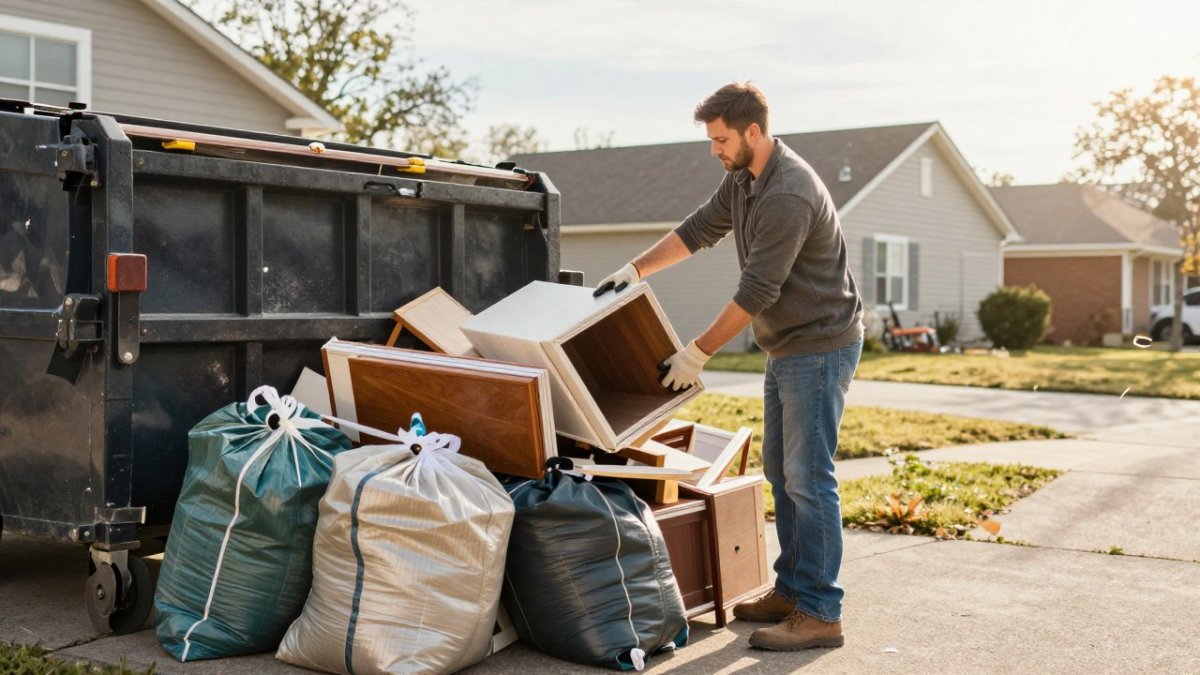
Use this checklist:
- Pick a flat, firm spot, ideally a driveway or gravel pad
- Measure the clearance for the truck
- Check for low wires, tree limbs, and parked cars
- Confirm the container will not block the sidewalk or street
- Sort hazardous waste out first: paint, chemicals, propane tanks
- Set aside donations and items for recycling
- Break down large furniture so it loads flat
Delivery Placement and Access Planning
Placement is an important part of the delivery process. A roll-off truck needs room to back in, set the container down, and pull away, so plan the spot before you book.
- Surface. A driveway or gravel pad is the default. Concrete and asphalt handle a loaded container; soft lawns, wet ground, and decorative pavers can crack or rut under the weight. If the only flat spot is grass, ask about plywood or board protection under the rails.
- Overhead clearance. The truck lifts and tilts the container as it sets it down, so low wires, tree limbs, and garage or carport overhangs can block a drop. Walk the approach and look up, not just down.
- Width and turning room. The truck needs a clear path in and out. Parked cars, basketball hoops, and narrow gates are the usual culprits. Measure the opening, not just the pad.
- Surface protection. A loaded container can scuff or crack a driveway. Boards under the rails spread the load and protect the surface; ask the hauler whether they provide them.
- Street and right-of-way. Street placement may require a right-of-way permit from your city, and rules vary by jurisdiction. Confirm the requirement with your city before you plan a street drop.
When a Driveway Is Not Available
If a property does not have a usable driveway, ask about placement options before you book so access is confirmed in advance.
For more on placement and access, read this Urbandale rental guide.
Schedule Your House Cleanout Dumpster Delivery
Tell us the size, the address, and the date, and we will confirm delivery.
Before you call, have these ready:
- Your project type and rough timeline
- The delivery address and where the container will sit
- Any access notes, like a narrow drive or a gate code
We serve Polk County and surrounding regions within a 20-mile radius. Pricing is transparent with no hidden fees.
A house cleanout is a big job, and the last thing you need is a container that shows up late or a bill that changes at pickup. Dumpys Rolloff delivers roll-off dumpsters in 10, 20, and 30-yard sizes with flat-rate pricing, same-day service when available, and pickup on your timeline.
Get started with Dumpys Rolloff and clear the house in one pass. Contact us to schedule delivery.
Frequently Asked Questions
What size dumpster do I need for a house cleanout?
It depends on how much you are clearing. A 10-yard container suits a single room, garage, or small decluttering job. A 20-yard dumpster handles most whole-house cleanouts, including furniture, appliances, and bagged household debris. A 30-yard container can suit larger clearings. If you are unsure, estimate the pile before you order and ask the provider to confirm the size against your project.
How much does it cost to rent a dumpster for a house cleanout?
House cleanout dumpster rental cost depends on container size, rental period, delivery distance, and the weight of what you throw away. Most quotes combine a flat rental rate with a tonnage allowance, and anything above that allowance is billed as an overage fee. Heavy materials like shingles, concrete, and dirt hit weight limits fastest. Ask for the full breakdown in writing, including fuel surcharges and disposal fees, so the final bill matches the quote.
How long can you keep a rental dumpster?
Rental periods depend on the size of your project. Confirm the included rental period before delivery. Decide how long to rent a dumpster based on your loading pace: if you are working weekends only, a longer window prevents rushed loading and extra trip fees. Confirm the included rental period before delivery and ask what a daily extension costs.
What can you put in a dumpster during a house cleanout?
Keep recyclables and donations out of the container where possible, and ask your provider which materials are accepted before you start loading. Ask your provider for the accepted materials list before you start loading so nothing has to be pulled back out.
